
Common Bermuda Grass Problems: Identification and How to Fix
From shade struggles to fungal diseases like large patch and dollar spot, Bermuda grass can decline fast without the right care. Here's how to spot, treat, and prevent the most common Bermuda grass problems.
Bermuda grass is one of the most popular warm-season grasses in the southern United States, prized for its heat tolerance, vigorous growth, and durability on lawns, sports fields, and golf courses. But despite its resilience, Bermuda grass can still decline and lose its lush green color if certain problems go unaddressed.
Below, we break down the most common Bermuda grass problems and diseases — and exactly how to fix each one.
Common Bermuda Grass Problems and Diseases
- Shade tolerance
- Inadequate watering
- Soil deficiencies
- Weeds
- Compaction and thatch buildup
- Large patch
- Dollar spot
- Leaf spot and melting out
- Rust
- Spring dead spot
Shade Tolerance Issues
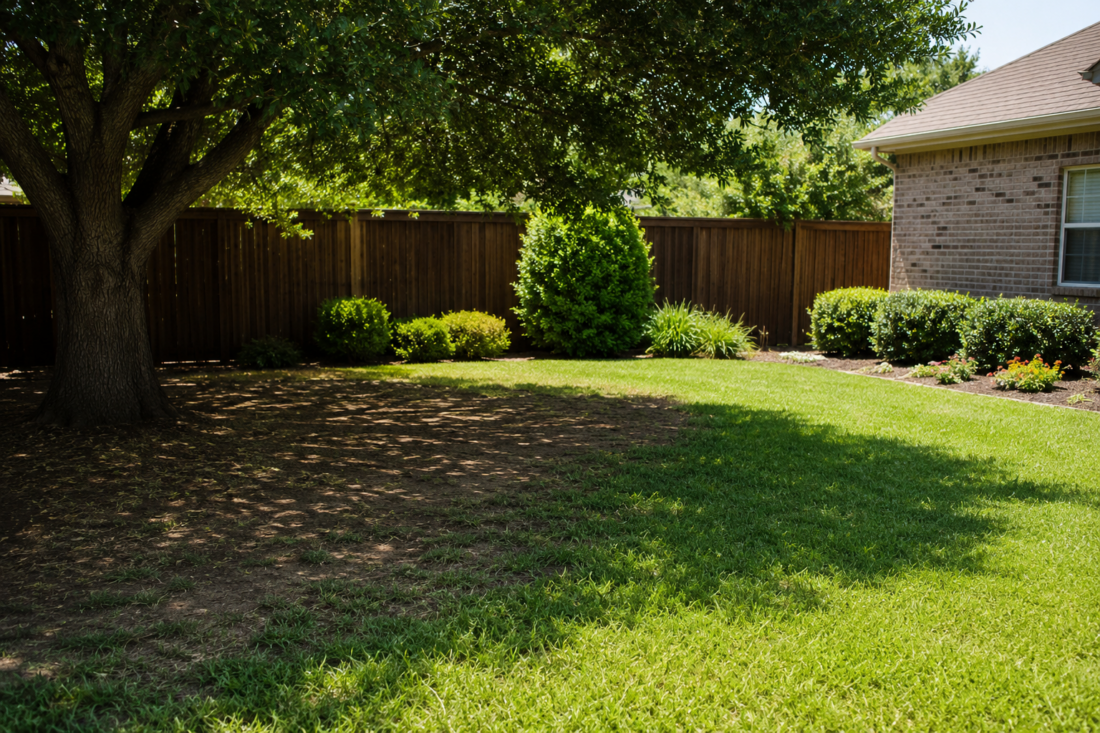
Bermuda grass needs full sun and struggles in areas that receive less than six hours of direct sunlight per day. If tree canopies or nearby structures are blocking light, consider pruning or removing the vegetation causing the shade. If removing the obstruction isn't an option, overseeding with a shade-tolerant grass variety or switching to an alternative ground cover in that area may be a better long-term fix than fighting Bermuda's sun requirements.
Inadequate (or Excessive) Watering
Bermuda grass has moderate water needs, but both underwatering and overwatering cause serious decline. Too little water causes wilting, browning, and increased vulnerability to damage. Too much water leads to waterlogged soil, which suffocates the root system.
If your Bermuda grass is drying out, water less frequently but more deeply, allowing moisture to penetrate down to the root zone rather than sitting on the surface. Not sure if your irrigation system is delivering water evenly? Contact us today for details on our irrigation maintenance service.
Soil Deficiencies
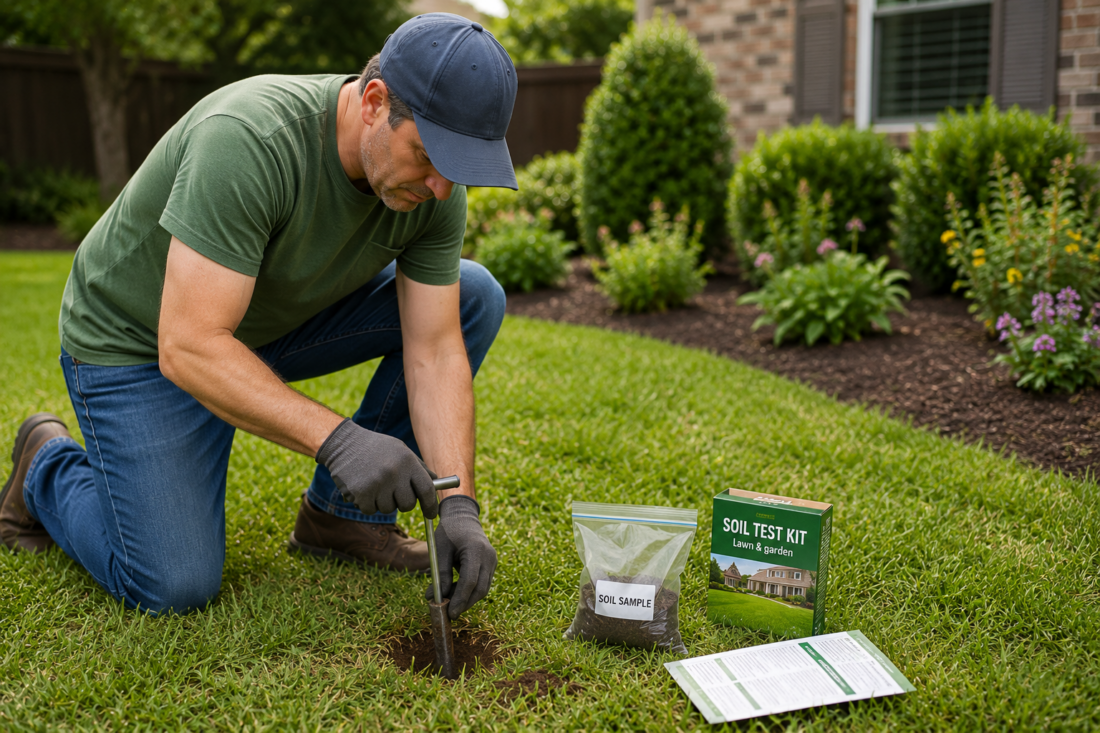
Bermuda grass thrives in well-draining, nutrient-rich soil. Deficiencies in nitrogen, phosphorus, or potassium commonly cause Bermuda grass to turn yellow or brown. A soil test is the fastest way to identify exactly what's missing, so you can apply targeted amendments or fertilizer rather than guessing.
Weeds in Bermuda Grass
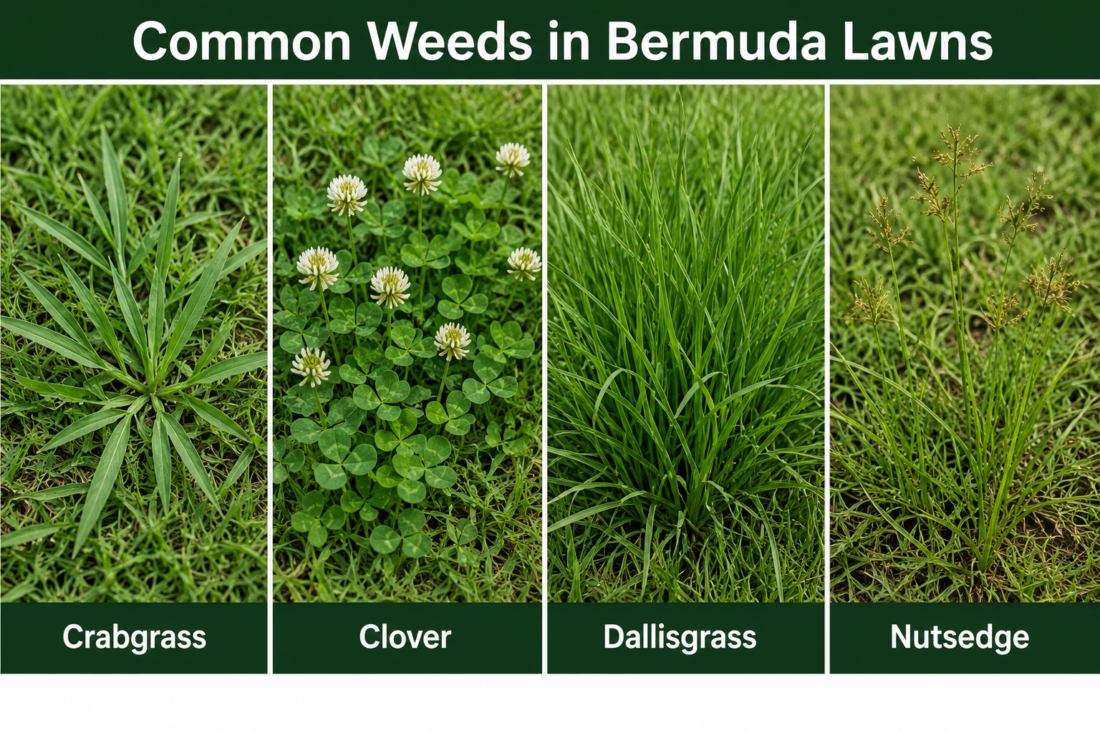
Several common weeds compete with Bermuda grass for nutrients, water, and sunlight:
- Crabgrass — the most common and troublesome weed in Bermuda lawns. (For a full breakdown, read our article on Weed Control for Bermuda Grass.)
- Clover — spreads quickly thanks to an aggressive root system and thrives in poor, dry soil.
- Dallisgrass — forms unsightly, thick-bladed clumps with shallow roots.
- Nutsedge — appears as small, brownish grassy growths that spread quickly into a dense, difficult-to-remove mat.
Because each weed type responds differently to treatment, a properly designed weed control program — one that inspects the lawn and targets the specific weeds present — is usually far more effective than a one-size-fits-all approach. Noticing weeds taking over your Bermuda grass? Contact us for professional weed control service before the problem spreads.
 Compaction and Thatch Buildup
Heavy foot traffic and inconsistent lawn care lead to soil compaction and thatch buildup — a layer of dead leaves and stems that accumulates at the soil surface. Both restrict the movement of air, water, and nutrients down to the roots, causing the grass to thin and decline.
Regular aeration is the most effective fix, loosening compacted soil and breaking up thatch so your lawn can breathe and absorb nutrients properly. Schedule a lawn aeration service to prevent thatch buildup before it damages your turf.
Bermuda Grass Diseases
Large Patch
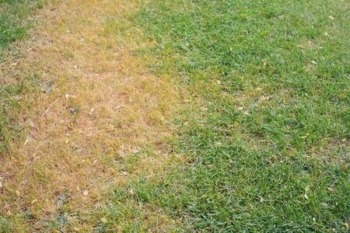
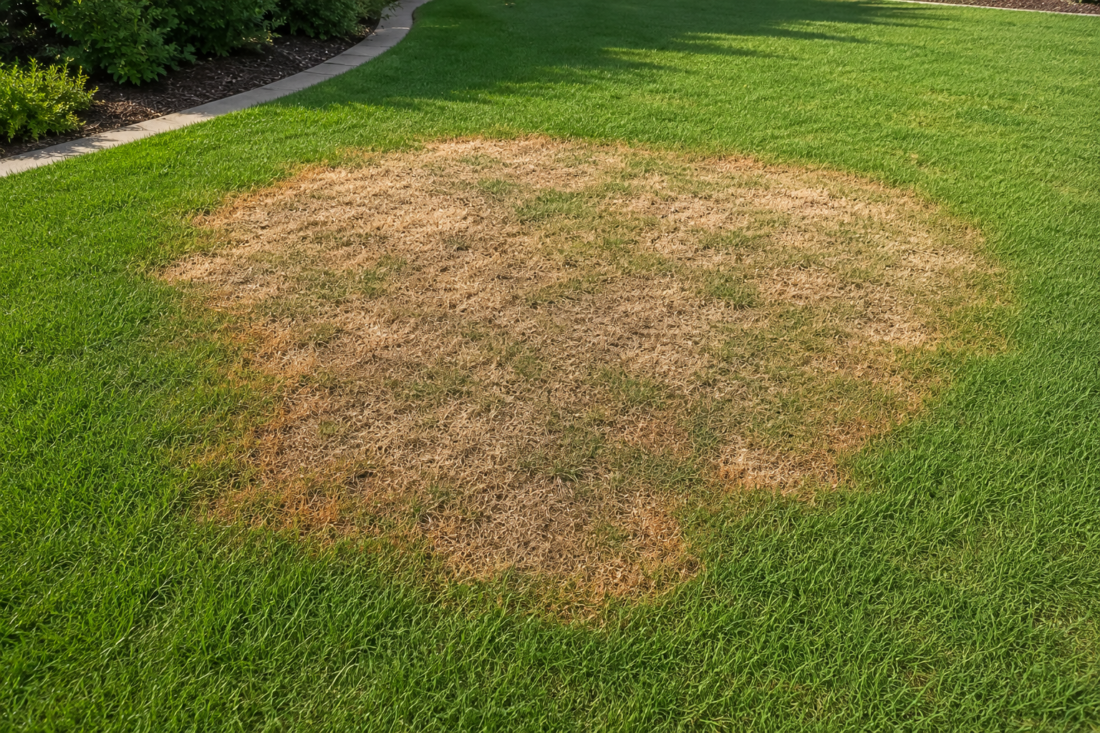
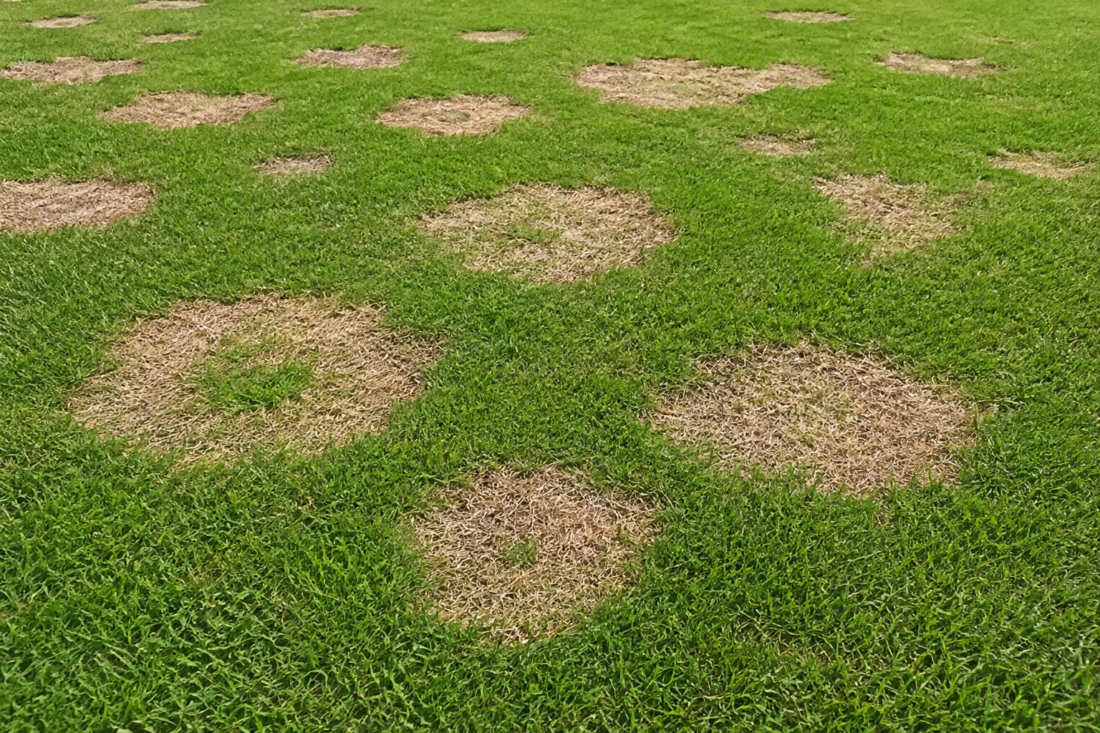
Large patch is a fungal disease that affects Bermuda grass during the cooler months of fall and spring. It appears as large, circular patches of brown or yellow grass that look sunken into the soil, and it can spread rapidly. Consistent lawn care — regular aeration, correct fertilization, and proper irrigation — is the best defense.
Dollar Spot
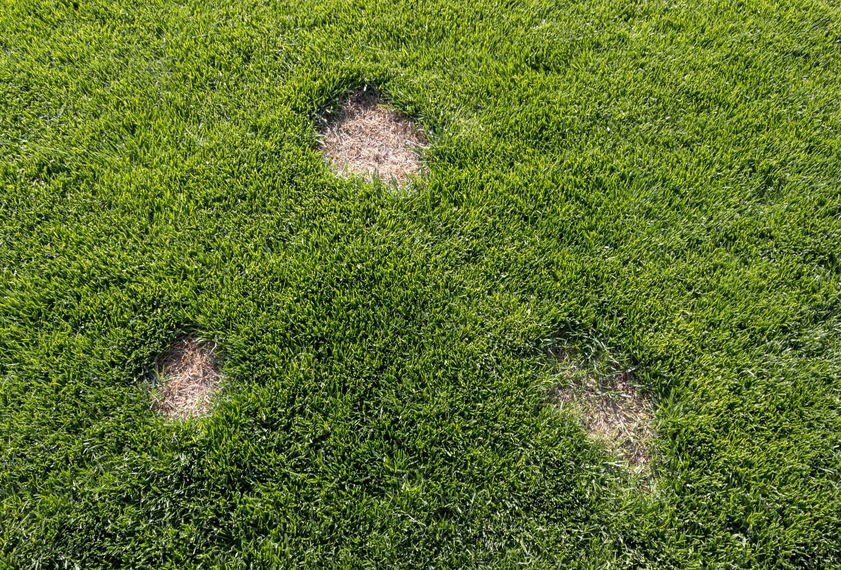
Dollar spot typically shows up during the warmer months of spring, summer, and fall. It presents as small, straw-colored circular patches that gradually expand into silver-dollar-sized spots. High humidity and wet foliage encourage its spread, so proper watering practices are essential. Fungicide treatment and increased nitrogen fertilization can also help control an active outbreak.
Leaf Spot and Melting Out
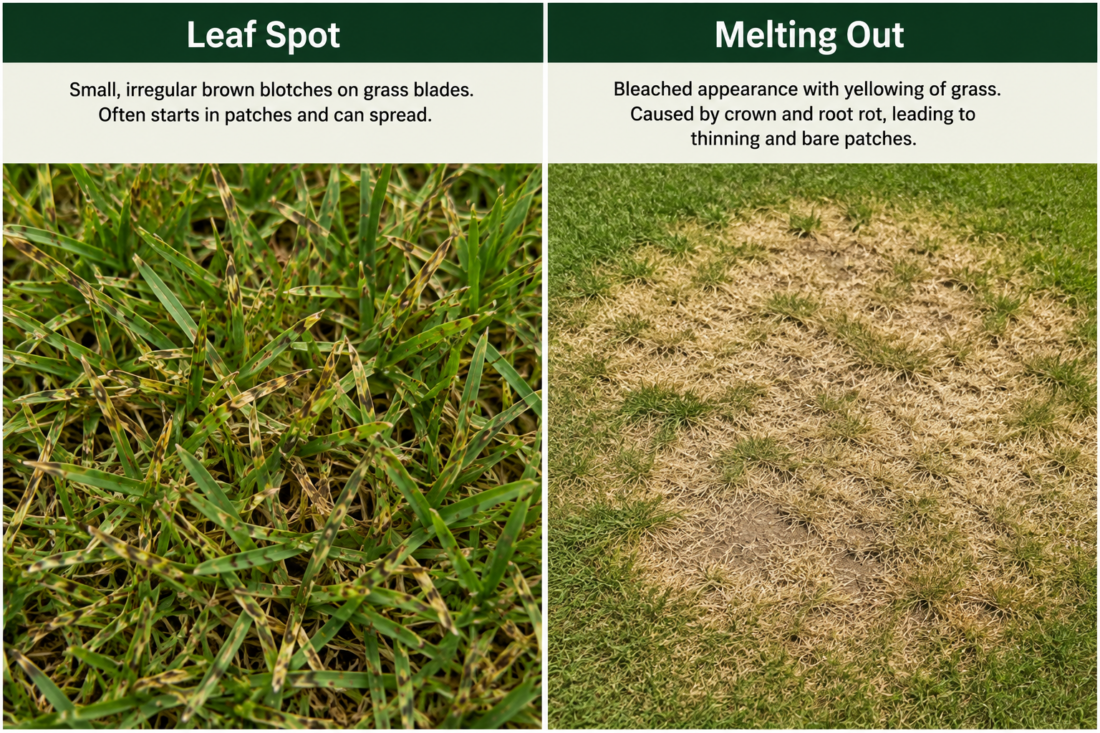
These two fungal diseases both thrive in hot, humid weather. Leaf spot appears as small, irregular brown blotches on grass blades, while melting out causes a bleached appearance and yellowing due to crown and root rot. Both lead to thinning and bare patches. Prevention includes minimizing watering during humid weather, mowing at the correct height, and avoiding excessive growth between mowings. Fungicide treatments can help manage active cases.
Rust
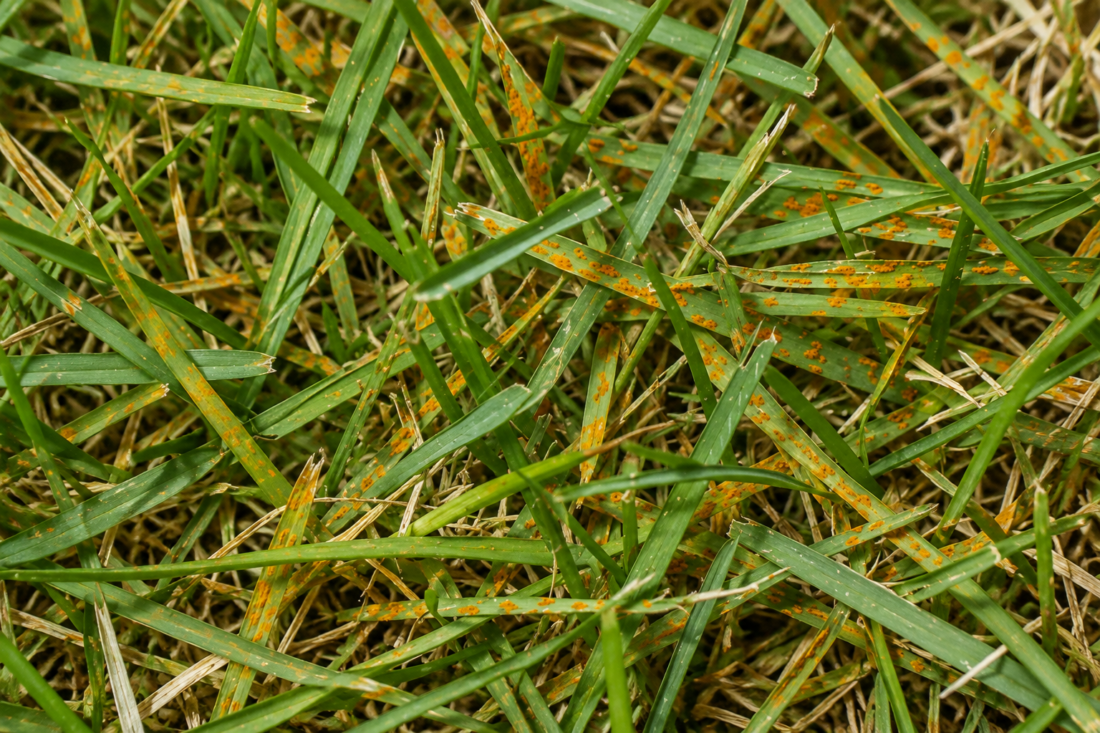
Rust is most common in the cooler fall months, appearing as orange or yellow powdery blisters on grass blades. Left untreated, it weakens and yellows the grass, eventually leading to die-off in affected areas.
Spring Dead Spot
As the name suggests, spring dead spot shows up primarily in spring, appearing as circular patches of dead or dormant-looking grass with yellow or brown blades. It attacks the root and crown of the plant, causing significant damage. Prevention includes avoiding excess nitrogen application, regular soil testing, overseeding with disease-resistant Bermuda varieties, and improving overall soil health. Fungicide treatment applied early can also help limit the damage.
Frequently Asked Questions
Why is my Bermuda grass turning brown or yellow?
Browning or yellowing Bermuda grass is usually caused by inadequate watering, soil nutrient deficiencies, insufficient sunlight, or an active fungal disease like large patch, dollar spot, or spring dead spot. A soil test and a close look at the pattern of discoloration (patchy vs. even, circular vs. widespread) can help narrow down the cause.
How much sunlight does Bermuda grass need?
Bermuda grass needs at least six hours of direct sunlight per day to thrive. In shadier areas, it will thin out and struggle regardless of watering or fertilization.
What is the most common weed problem in Bermuda grass?
Crabgrass is the most common and difficult weed to control in Bermuda grass lawns, followed by clover, dallisgrass, and nutsedge.
How often should I aerate my Bermuda grass lawn?
Most Bermuda grass lawns benefit from aeration once a year, ideally in late spring to early summer during peak growing season, though heavily compacted or high-traffic lawns may need it more often.
Can Bermuda grass recover from fungal disease?
Yes, in most cases. With correct watering, mowing height, fertilization, and — when needed — fungicide treatment, Bermuda grass typically recovers well from diseases like dollar spot, leaf spot, and large patch if they're caught early.
Keep Your Bermuda Grass Healthy Year-Round
Addressing these common Bermuda grass problems early is the key to keeping your lawn thick, green, and resilient all season long. But between watering schedules, soil testing, aeration, weed control, and disease monitoring, staying ahead of every issue is a lot to manage on your own.
JC's Landscaping offers professional lawn care services built specifically around Bermuda grass — including irrigation maintenance, aeration, weed control, and disease treatment. Contact us today for a free consultation and keep your Bermuda grass strong, resilient, and vibrant all year.
 M Valdivia
As a seasoned content manager with a background in education and human development, I bring a unique perspective to lawn care and landscaping topics. For the past four years, I've specialized in creating clear, helpful, and research-backed content for homeowners across North Texas and beyond. While I don’t have a landscaping degree, I collaborate closely with lawn care professionals to ensure every article is accurate, practical, and easy to follow.
Request a Free Quote
Get a customized estimate for your project.
Get Free Quote (972) 571-7899Why Choose Us
- 20+ years experience
- Licensed & insured
- Free estimates
- 100% satisfaction guarantee
- Locally owned & operated
Service Areas
Frisco, Plano, McKinney, Dallas, Allen, Carrollton, Melissa, Lewisville, Grapevine, Little Elm, The Colony, Prosper, Celina, Castle Hills, Fort Worth
Ready to Get Started?
Contact us today for a free estimate on your project.