
How Long Should You Run Your Sprinklers in North Texas?
Wondering how long to run your sprinklers for a healthy North Texas lawn? Get exact watering times by sprinkler type, the best time of day to water, and tips for dealing with heavy clay soil — from the experts at JC's Landscaping.
Keeping your lawn lush and green in North Texas takes more than just turning on the sprinklers — it takes a little strategy. One of the most common questions we hear at JC's Landscaping is: "How long should I run my sprinklers?"
The answer isn't one-size-fits-all — it depends on your sprinkler type, your soil, and the season — but we'll break it down step by step so you can dial in exactly the right watering schedule for your lawn.
Quick Answer: How Long to Run Sprinklers by Type
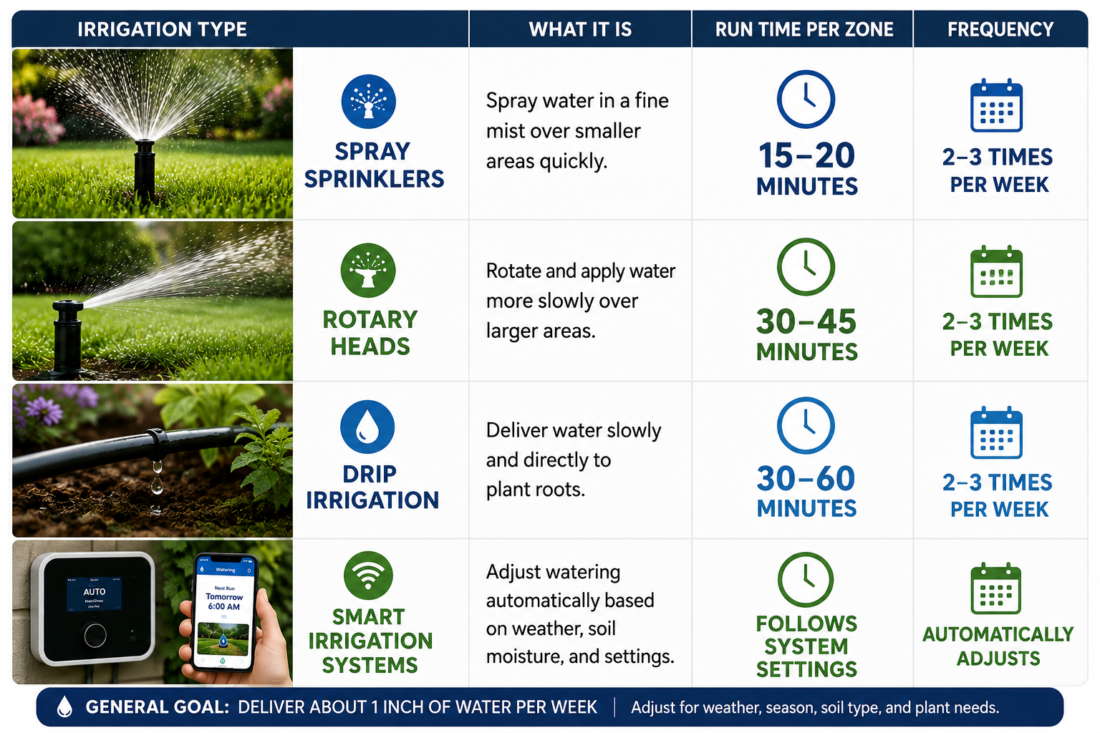
| Sprinkler TypeRun Time (Per Zone)Frequency | ||
| Spray sprinklers | 15–20 minutes | 2–3 times per week |
| Rotary heads | 30–45 minutes | 2–3 times per week |
| Drip irrigation | 30–60 minutes | 2–3 times per week |
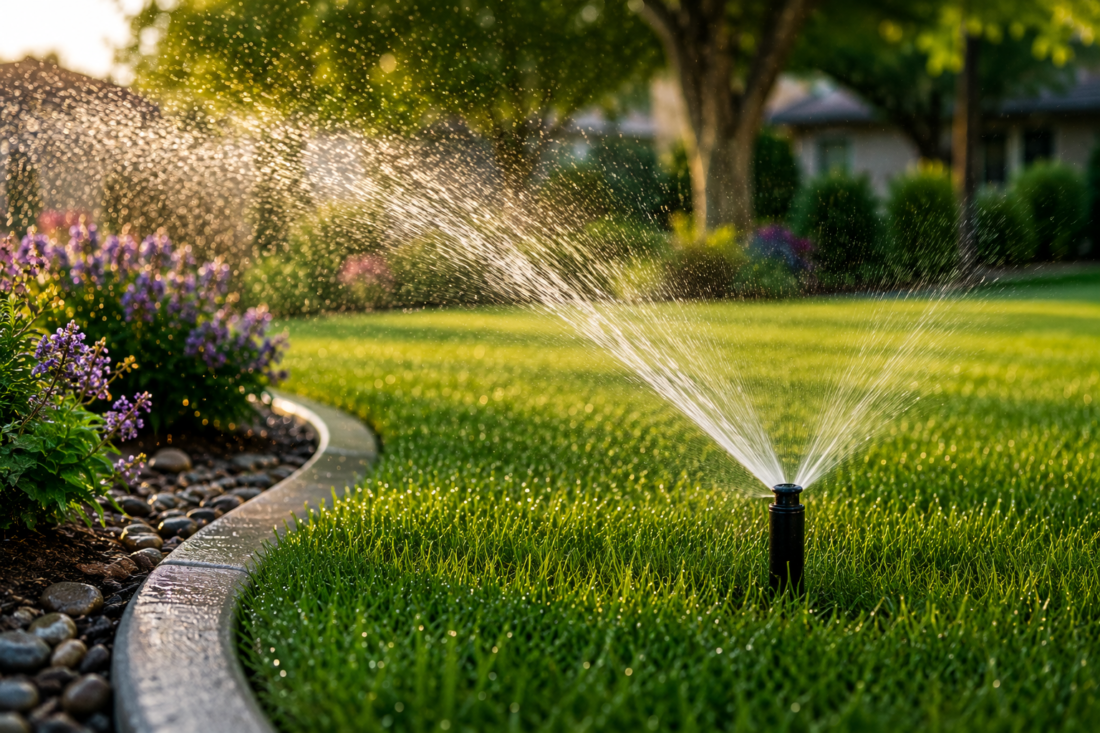
As a general rule, your lawn needs about 1 inch of water per week, including rainfall, to stay healthy through North Texas heat.
How Long to Water Based on Your Sprinkler Type
Spray Sprinklers
For typical spray sprinkler systems, run each zone for 15–20 minutes, two to three times per week. Spray heads apply water relatively quickly, so shorter run times are usually enough to reach that 1-inch weekly target.
Rotary Heads
Rotary heads distribute water more slowly and cover a larger area with a rotating stream, so they need more time to deliver the same amount of water. Aim for 30–45 minutes per zone, two to three times a week, to match the coverage of a spray system. Read more about the different types of sprinkler heads to identify which type you have.
Drip Irrigation
If your system includes drip irrigation for flower beds or landscaped areas, run times are typically longer — around 30–60 minutes — since drip systems release water slowly and directly at the root zone rather than spraying it across a wide area.
Smart Irrigation Systems
Smart irrigation systems use a Wi-Fi-connected controller that automatically adjusts your watering schedule based on real-time weather, soil moisture, or settings you control from a smartphone app — rather than running on a fixed manual schedule. They work with your existing spray, rotary, or drip heads, so the run-time guidelines above still apply as a starting point; the smart controller simply fine-tunes when and how much to water based on actual conditions, which helps prevent both overwatering and underwatering.
Read more about the types of sprinklers.
What Time of Day Should You Water?
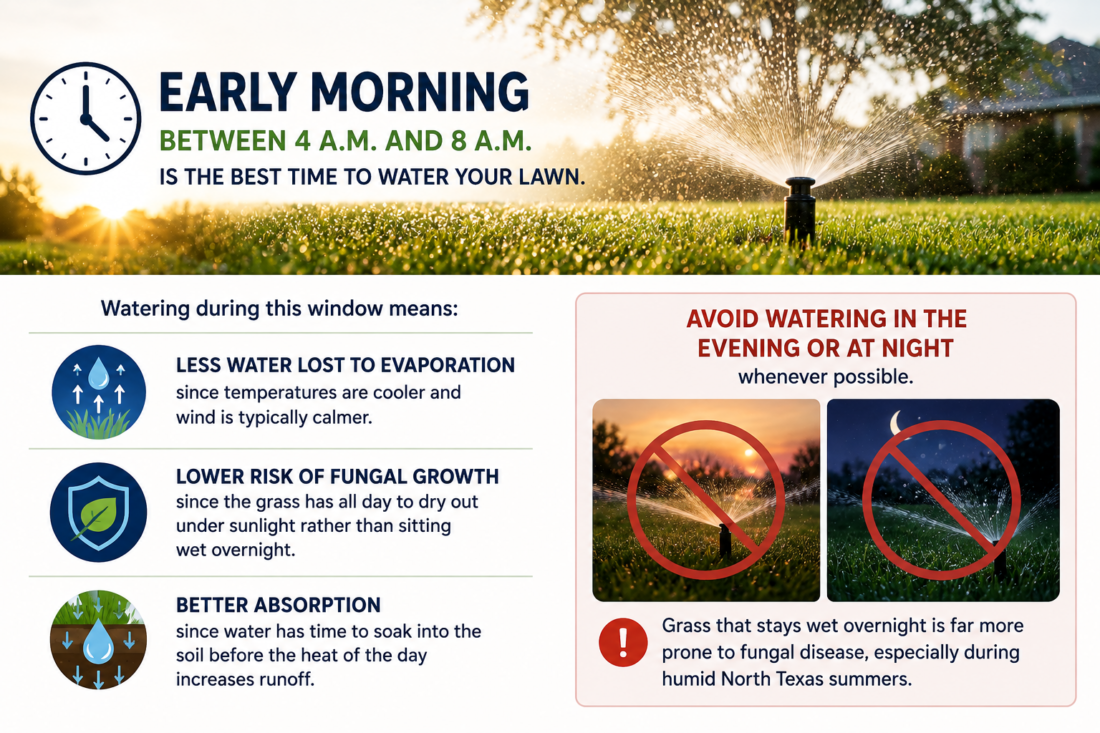
Early morning — between 4 a.m. and 8 a.m. — is the best time to water your lawn. Watering during this window means:
- Less water lost to evaporation, since temperatures are cooler and wind is typically calmer
- Lower risk of fungal growth, since the grass has all day to dry out under sunlight rather than sitting wet overnight
- Better absorption, since water has time to soak into the soil before the heat of the day increases runoff
Avoid watering in the evening or at night whenever possible — grass that stays wet overnight is far more prone to fungal disease, especially during humid North Texas summers.
Watering Tips for North Texas Clay Soil
North Texas soil is often heavy in clay, which doesn't absorb water quickly. If you've noticed water pooling on the surface or running off into the street before it has a chance to soak in, your lawn is likely dealing with this exact issue.
Learn More: Amendments for Clay Soil
Try the Cycle and Soak Method
Instead of watering for 30 minutes straight, break your watering into shorter cycles with a break in between:
- Water for 15 minutes
- Let the water rest and soak in for 20–30 minutes
- Water for another 15 minutes
This "cycle and soak" approach gives clay soil time to absorb water between cycles instead of letting it pool and run off, which helps prevent waste and gets more water actually reaching your grass's root system.
Seasonal Watering Adjustments
Watering needs change throughout the year, and running the same schedule year-round is one of the most common irrigation mistakes homeowners make:
- Cooler months (fall/winter): Your lawn needs significantly less water — dormant or slow-growing grass can often go with reduced or minimal watering.
- Extreme summer heat: Your lawn needs more frequent, consistent watering to keep up with evaporation and heat stress. Find out how to make grass green in summer.
- Spring/fall transition: Adjust gradually rather than making sudden changes, since grass responds better to gradual shifts in watering volume.
Smart irrigation systems or soil moisture sensors can take the guesswork out of this entirely, automatically adjusting watering times based on real-time weather and soil conditions rather than a fixed schedule.
Signs You're Watering Incorrectly
Not sure if your current schedule is working? Watch for these signs:
- Overwatering: Spongy or mushy soil, mushroom growth, yellowing grass, or a persistent musty smell
Learn More: How to Kill Mushrooms in Lawn
- Underwatering: Grass that doesn't spring back after you walk on it, blue-gray discoloration, or visibly dry, cracked soil
- Uneven watering: Patchy dry spots in some areas while others stay soggy — often a sign of a malfunctioning sprinkler head or poor zone coverage
If you're seeing any of these signs consistently, it's usually less about how long you're running your system and more about whether your system itself is working correctly.
Frequently Asked Questions
How many minutes should I run my sprinklers?
Most spray sprinkler systems need 15–20 minutes per zone, two to three times a week. Rotary heads need 30–45 minutes per zone due to their slower water distribution.
Is it better to water for a long time once a week, or shorter sessions more often?
For most North Texas lawns, two to three sessions per week is better than one long weekly watering. This is especially true for clay-heavy soil, where the cycle and soak method (shorter sessions with breaks in between) helps prevent runoff and gets more water to the root zone.
What time of day should I water my lawn?
Early morning, between 4 a.m. and 8 a.m., is best. This reduces evaporation loss and gives grass time to dry out during the day, lowering the risk of fungal disease.
How much water does my lawn need per week?
Most North Texas lawns need about 1 inch of water per week, including rainfall, to stay healthy.
Why is water pooling or running off my lawn?
This is a common issue with North Texas clay soil, which absorbs water slowly. The cycle and soak method — breaking your watering into shorter sessions with rest periods in between — usually solves this.
Do I need to water less in the winter?
Yes. Grass needs significantly less water during cooler months when it's dormant or growing slowly. Watering on a summer schedule year-round wastes water and can even harm your lawn.
How do I know if my sprinkler system needs repair?
Signs like dry patches next to soggy areas, unusually high water bills, or visible pooling/runoff often point to a malfunctioning zone, broken head, or system that needs a professional tune-up rather than a scheduling fix.
Get Expert Help With Your Sprinklers
If you're unsure whether your irrigation system is doing the job, or you've noticed dry spots, runoff, or unexpectedly high water bills, it may be time for a professional tune-up rather than more guesswork with your watering schedule.
At JC's Landscaping, we offer expert irrigation maintenance services that diagnose exactly what's going wrong — whether it's a scheduling issue, a broken head, uneven zone coverage, or aging equipment — and get your sprinklers running efficiently and effectively.
Let our team help you save water and keep your yard looking its best!
 M Valdivia
As a seasoned content manager with a background in education and human development, I bring a unique perspective to lawn care and landscaping topics. For the past four years, I've specialized in creating clear, helpful, and research-backed content for homeowners across North Texas and beyond. While I don’t have a landscaping degree, I collaborate closely with lawn care professionals to ensure every article is accurate, practical, and easy to follow.
Request a Free Quote
Get a customized estimate for your project.
Get Free Quote (972) 571-7899Why Choose Us
- 20+ years experience
- Licensed & insured
- Free estimates
- 100% satisfaction guarantee
- Locally owned & operated
Service Areas
Frisco, Plano, McKinney, Dallas, Allen, Carrollton, Melissa, Lewisville, Grapevine, Little Elm, The Colony, Prosper, Celina, Castle Hills, Fort Worth
Ready to Get Started?
Contact us today for a free estimate on your project.