
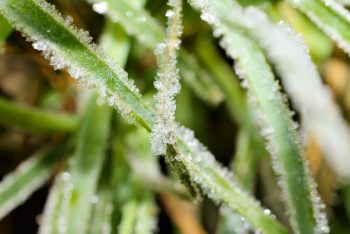
How Often Should You Mow Your Lawn in Winter?
Wondering how often to mow your lawn during winter? Learn how cold weather affects grass growth and how to adjust your mowing schedule to keep your lawn healthy and prepared for spring.

Are there any exceptions to the common practice of not mowing your lawn during the winter? If it is a good idea sometimes, then when should you do it, and why? Continue reading, how often should you mow your lawn in winter to find out.
As it turns out, there are a few key things to look out for when making this decision.
Here in North Texas, we commonly get warm spells in the midst of our already mild winters. This leads to small growth spurts in your lawn. There are benefits to keeping your lawn as short as possible throughout the winter. In these instances, mowing is a good idea.
Here are the various factors to consider:
Dormancy
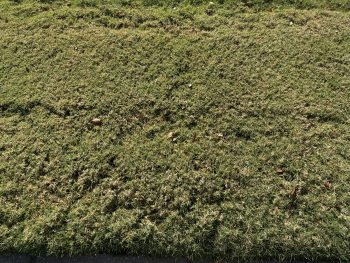
When a plant goes into a state of dormancy, it is similar to how many animals hibernate throughout the winter. The organism’s metabolism slows down significantly. Thus, allowing it to survive on very little sustenance, while it “rests” through the season.
Cool weather grasses go dormant when the soil sustains a temperature of about 40 to 45 degrees Fahrenheit. While warm weather grasses do so at about 50 to 55 degrees. They don’t actually stop growing completely. Most winter growth that occurs with a grass bed is negligible.
When the ambient air warms up sufficiently to heat the ground, the grass’s metabolism speeds up a bit. This causes a small amount of growth. This growth is brief. None the less, a sufficient amount of warmth and sunlight will result in grass blades lengthening.
Benefits of Keeping the Blades Short
Experts will advise to get your grass blades as short as possible as winter approaches. Just not all at once. In the final few autumn mowing sessions, take it down to the shortest length possible without scalping it. Never remove more than 1/3 of the blade length at a time.
This results in mowing more frequently in the final weeks of fall, to avoid cutting off too much of the grass all at once. Shorter blades allow your topsoil to continue “breathing.” They also allow for that little bit of winter growth to occur without regular monitoring.
No matter the season, lengthy grass that’s long enough to bow over and shade itself is prone to lawn disease. This is especially true for winter, when the grass is “drinking” less and there is less heat and light to help excess moisture evaporate.
Additionally, grass that is kept short over the winter tends to green-up more quickly come springtime. When the grass bed emerges from dormancy and begins absorbing more water and nutrients from the soil, shorter blades mean less overall work for the organism. (Yes, your bed of grass is a composite organism!)
Keep yourself busy this winter by planting winter flowers.
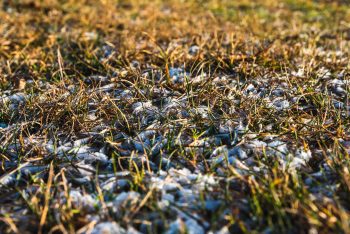
When Do I Know if I Should Mow?
First of all, it is a great idea to continue mowing dead leaves into mulch, so long as they remain present in your yard. Even if your grass bed is dormant, the soil itself will be enriched by the organic material provided. Just be sure you set the blades higher to avoid scalping your lawn, if your grass is already very short.
As mentioned above, any excessive growth should be addressed if you’re experiencing a mild winter with lots of warm days. Avoid letting the grass get long enough to start drooping. If it reaches that length, then it’s time to pick a dry day to go ahead and mow.
So is it ever safe to mow when the grass is wet, then? Mowing a wet lawn is generally to be avoided. But if you’re stuck between mowing a too-long bed of grass before a freeze hits, or facing lawn damage, here is your rule of thumb:
As long as the grass “bounces back” when you step on it, the both the blades and the soil should be dry enough for a quick mow. Blades weighted down by excess moisture won’t cut evenly, and saturated soil will cause the mower to pull up healthy grass. So proceed with caution, and be sure your lawn is only mildly damp before an emergency-mow.
Visit our Lawn Maintenance Service Page to learn how we can help with mowing and other lawn care tasks.
Wrapping it Up
- Mow as short as possible leading up to winter, but not all at once.
- Keep mowing excessive foliage debris to nourish your soil.
- Short blades allow the ground to keep breathing, which is important even when your grass bed is dormant.
- Your lawn may emerge from dormancy if the ground temperature rises above 40-55 degrees for more than a few days.
- In the event of excessive winter growth, your biggest warning sign is if the blades get long enough to begin bowing over.
- Grass long enough to shade itself can contribute to lawn disease, especially in the winter.
- Only mow wet grass if necessary, and only if it bounces back after being stepped on!

Janice Nelson
Request a Free Quote
Get a customized estimate for your project.
Get Free Quote (972) 571-7899Why Choose Us
- 20+ years experience
- Licensed & insured
- Free estimates
- 100% satisfaction guarantee
- Locally owned & operated
Service Areas
Frisco, Plano, McKinney, Dallas, Allen, Carrollton, Melissa, Lewisville, Grapevine, Little Elm, The Colony, Prosper, Celina, Castle Hills, Fort Worth
Ready to Get Started?
Contact us today for a free estimate on your project.