
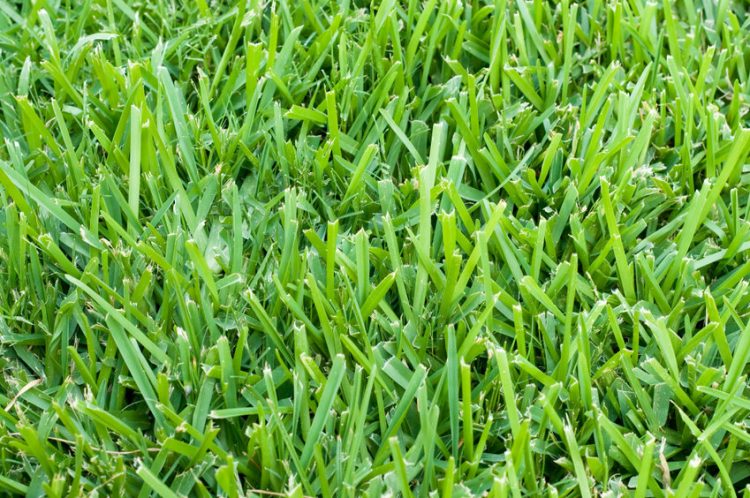
When to Fertilize St. Augustine Grass
Not sure when to fertilize St. Augustine grass in North Texas? Get a season-by-season schedule with exact nitrogen rates, timing windows, and tips for a lush, healthy lawn year-round.
 St. Augustine grass is one of the most popular lawn choices in North Texas thanks to its ability to withstand the region's hot, humid climate. But to keep it lush, green, and healthy, proper fertilization timing is essential. Knowing exactly when to fertilize is trickier than it sounds, since the right schedule depends on weather conditions, growth stage, and your lawn's specific needs.
This guide breaks down exactly when to fertilize St. Augustine grass in North Texas, season by season, with specific nitrogen rates for each application.
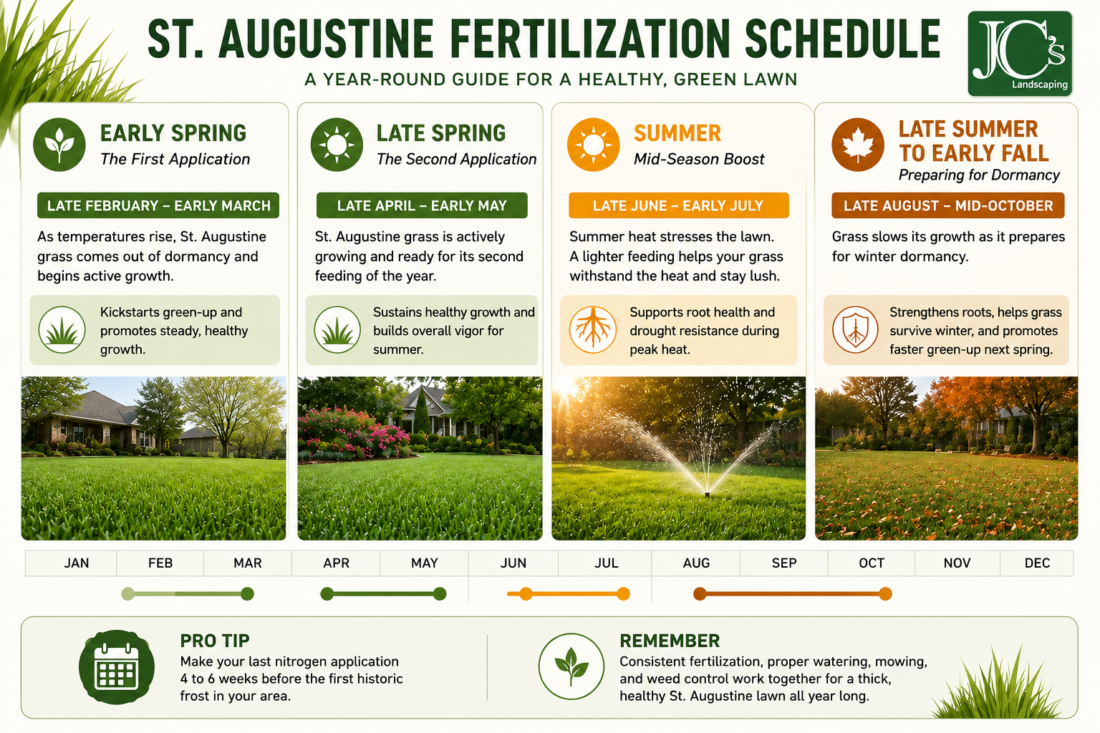
Quick Reference: St. Augustine Fertilization Schedule
| SeasonTimingNitrogen Rate (per 1,000 sq ft) | ||
| Early Spring | Late February–Early March | 1 lb |
| Late Spring | Late April–Early May | 1 lb |
| Summer | Late June–Early July | 0.5–0.75 lb |
| Late Summer/Early Fall | Late August–Mid October | 0.5–0.75 lb |
St. Augustine grass typically needs a total of 1 to 4 pounds of nitrogen per 1,000 square feet annually, depending on soil type and length of growing season — the schedule above, when totaled across all four applications, falls squarely within that recommended range.
Understanding St. Augustine Grass Nutrient Needs
Before diving into timing, it helps to understand what you're actually feeding your lawn. Like all plants, St. Augustine needs three primary macronutrients:
- Nitrogen (N) — promotes healthy leaf growth and that deep green color
- Phosphorus (P) — supports root development
- Potassium (K) — enhances overall plant health and stress tolerance
St. Augustine grass typically requires more nitrogen than other warm-season grasses to maintain its density and color. However, over-applying nitrogen can backfire — leading to excessive thatch buildup or making the lawn more vulnerable to pests and disease. Choosing the right fertilizer and applying it at the right time each season helps keep growth controlled and healthy, rather than pushing too much soft, disease-prone growth at once.
Find out more about maintaining St. Augustine turfgrass.
Early Spring: The First Application
As North Texas transitions from winter to spring, temperatures rise and St. Augustine grass begins coming out of dormancy. Early spring — usually late February to early March — is the ideal window for the first fertilizer application of the year.
- Fertilizer type: Slow-release, with a nitrogen-phosphorus-potassium ratio of around 3:1:2 or 4:1:2
- Application rate: 1 pound of nitrogen per 1,000 square feet
Slow-release fertilizers provide a steady nutrient supply over time, promoting controlled growth while reducing the risk of nitrogen runoff. Always follow the manufacturer's specific application instructions for your product.
Weed control goes hand-in-hand with lawn fertilization; reducing weed competition allows your lawn to become thicker and denser. Learn about weed control for St. Augustine lawns.
Late Spring: The Second Application
By late spring — typically late April to early May — St. Augustine grass is actively growing and ready for its second feeding of the year.
- Fertilizer type: Balanced slow-release, same 3:1:2 or 4:1:2 ratio as the first application
- Application rate: 1 pound of nitrogen per 1,000 square feet
This second round sustains healthy growth through the height of the growing season and helps build overall vigor heading into summer heat.
Summer: Mid-Season Boost
North Texas summer heat puts real stress on St. Augustine grass. A mid-season application around late June to early July helps your lawn withstand the heat and maintain its lush appearance through the toughest stretch of the year.
- Fertilizer type: Slow-release, balanced 3:1:2 or 4:1:2 ratio
- Application rate: 0.5–0.75 pounds of nitrogen per 1,000 square feet (lower than spring applications)
The reduced rate matters here. Pushing too much nitrogen during peak summer heat will stress the grass rather than help it, since it forces new growth at exactly the time the plant is already working hard to survive the heat. This lighter feeding instead supports root health and drought resistance.
Late Summer to Early Fall: Preparing for Dormancy
As summer transitions into fall, St. Augustine grass naturally begins slowing its growth in preparation for winter dormancy. Fertilizing during this window, roughly late August through mid-October, should focus on maintaining root strength rather than pushing new top growth.
- Fertilizer type: Slow-release, 3:1:2 or 4:1:2 ratio, same as previous applications
- Application rate: 0.5–0.75 pounds of nitrogen per 1,000 square feet (reduced rate)
This final application sustains the grass through winter and sets it up for stronger, faster green-up the following spring. JC's recommends making your last nitrogen application 4 to 6 weeks before the first historic frost in your area.
Other Factors That Affect Fertilization Success
Timing and nitrogen rate are only part of the picture. A few additional factors can make or break your results:
- Soil testing: Periodic soil testing reveals your lawn's actual nutrient levels and pH balance, letting you fine-tune fertilization rather than guessing. North Texas soils commonly run more alkaline than ideal for St. Augustine, which can affect nutrient uptake even when you're applying the right amount of fertilizer.
- Watering and irrigation: Proper watering — deep, infrequent irrigation rather than light daily watering — helps fertilizer absorb properly and reduces nutrient runoff and waste. Be sure to follow local watering restrictions as well.
- Weed control: A weed-free lawn keeps St. Augustine healthier overall, since weeds compete directly for the same nutrients you're applying. Pairing a pre-emergent herbicide with your fertilization schedule helps prevent weeds from taking hold in the first place.
Fall is also a great time to schedule other seasonal lawn work, like a fall clean-up service, to keep your yard in top shape heading into the cooler months.
Learn More: How to Repair St. Augustine Grass
Common St. Augustine Fertilization Mistakes to Avoid
Even with the right schedule, a few common missteps can undo your results. Watch out for these:
- Fertilizing on a set calendar date instead of based on grass growth. Weather varies year to year — if your lawn hasn't greened up and been mowed at least twice yet, it's not ready for its first application, even if the calendar says "early spring."
- Applying full-strength summer fertilizer. Using the same 1-pound spring rate during peak summer heat pushes too much soft, disease-prone growth right when the grass is already stressed. Stick to the reduced 0.5–0.75 lb rate for summer and fall applications.
- Skipping soil tests and guessing at nutrient needs. North Texas soil tends to run alkaline, which can cause yellowing that looks like a nitrogen deficiency but is actually a pH issue. Applying more fertilizer in this case won't fix the problem and can make thatch buildup worse.
- Fertilizing right before or during a heavy rain event. Nutrients can wash away before the grass has a chance to absorb them, wasting product and increasing runoff into storm drains.
- Applying fertilizer to dry, drought-stressed grass. Water your lawn a day or two before fertilizing so the grass isn't under additional stress when nutrients are introduced.
- Fertilizing too late into fall. Applying nitrogen too close to the first frost encourages tender new growth that won't have time to harden off before winter, leaving it more vulnerable to cold damage.
- Ignoring the fertilizer label's specific instructions. N-P-K ratios and recommended rates vary by product — always follow the manufacturer's guidance rather than assuming every slow-release fertilizer applies the same way.
Avoiding these mistakes is often what separates a lawn that thrives year-round from one that looks great for a few weeks after each application and then struggles.
Frequently Asked Questions
How many times a year should I fertilize St. Augustine grass?
Most North Texas lawns benefit from four applications per year: early spring, late spring, a summer mid-season boost, and a late summer/early fall application before dormancy.
What is the best fertilizer ratio for St. Augustine grass?
A slow-release fertilizer with a nitrogen-phosphorus-potassium ratio of around 3:1:2 or 4:1:2 is recommended for St. Augustine grass throughout the growing season.
Can you over-fertilize St. Augustine grass?
Yes. Excessive nitrogen can lead to thatch buildup and increased vulnerability to pests and disease. This is why application rates are reduced during summer and fall compared to the spring applications.
When should I stop fertilizing St. Augustine grass for the season?
Texas A&M AgriLife Extension recommends making your final nitrogen application 4 to 6 weeks before the first historic frost in your area, typically landing sometime between late August and mid-October in North Texas.
Should I fertilize St. Augustine grass in the winter?
No. St. Augustine grass goes dormant in winter and doesn't actively use nutrients during this period, so fertilizing during dormancy is unnecessary and can contribute to runoff waste.
Why is my St. Augustine grass yellow even though I fertilized it?
Yellowing despite regular fertilization is often a sign of a pH imbalance rather than a nitrogen deficiency — North Texas soils tend to run alkaline, which can limit nutrient uptake. A soil test is the best way to confirm what's actually going on before applying more fertilizer.
Get Personalized Lawn Fertilization Help
Fertilizing St. Augustine grass in North Texas requires a seasonal approach — adjusting nutrient applications to meet your lawn's changing needs from early spring dormancy break-out all the way through fall preparation for winter. Follow the guidelines above for early spring, late spring, summer, and fall, and your St. Augustine lawn will stay vibrant, resilient, and the envy of the neighborhood.
Always read and follow the instructions on your specific fertilizer product, since application rates can vary by formulation.
If you have questions or want a lawn care program built specifically around your yard's needs, contact JC's Landscaping today for personalized fertilization advice and scheduling.
 M Valdivia
As a seasoned content manager with a background in education and human development, I bring a unique perspective to lawn care and landscaping topics. For the past four years, I've specialized in creating clear, helpful, and research-backed content for homeowners across North Texas and beyond. While I don’t have a landscaping degree, I collaborate closely with lawn care professionals to ensure every article is accurate, practical, and easy to follow.
Request a Free Quote
Get a customized estimate for your project.
Get Free Quote (972) 571-7899Why Choose Us
- 20+ years experience
- Licensed & insured
- Free estimates
- 100% satisfaction guarantee
- Locally owned & operated
Service Areas
Frisco, Plano, McKinney, Dallas, Allen, Carrollton, Melissa, Lewisville, Grapevine, Little Elm, The Colony, Prosper, Celina, Castle Hills, Fort Worth
Ready to Get Started?
Contact us today for a free estimate on your project.